

Frequently Asked Questions
Frequently Asked Questions
Planning a website can bring up more questions than most business owners expect.
You may be wondering whether your current website needs replacing, how much a professional website should cost, whether SEO is included, what happens after launch, or whether you will be able to update the site yourself. You might also be trying to work out something less obvious, such as whether your website is still helping people understand and trust your business.
That uncertainty is completely normal.
A website is not just a design project. It affects how people see your business, how clearly they understand what you offer, how confident they feel before getting in touch and how easy it is for them to take the next step.
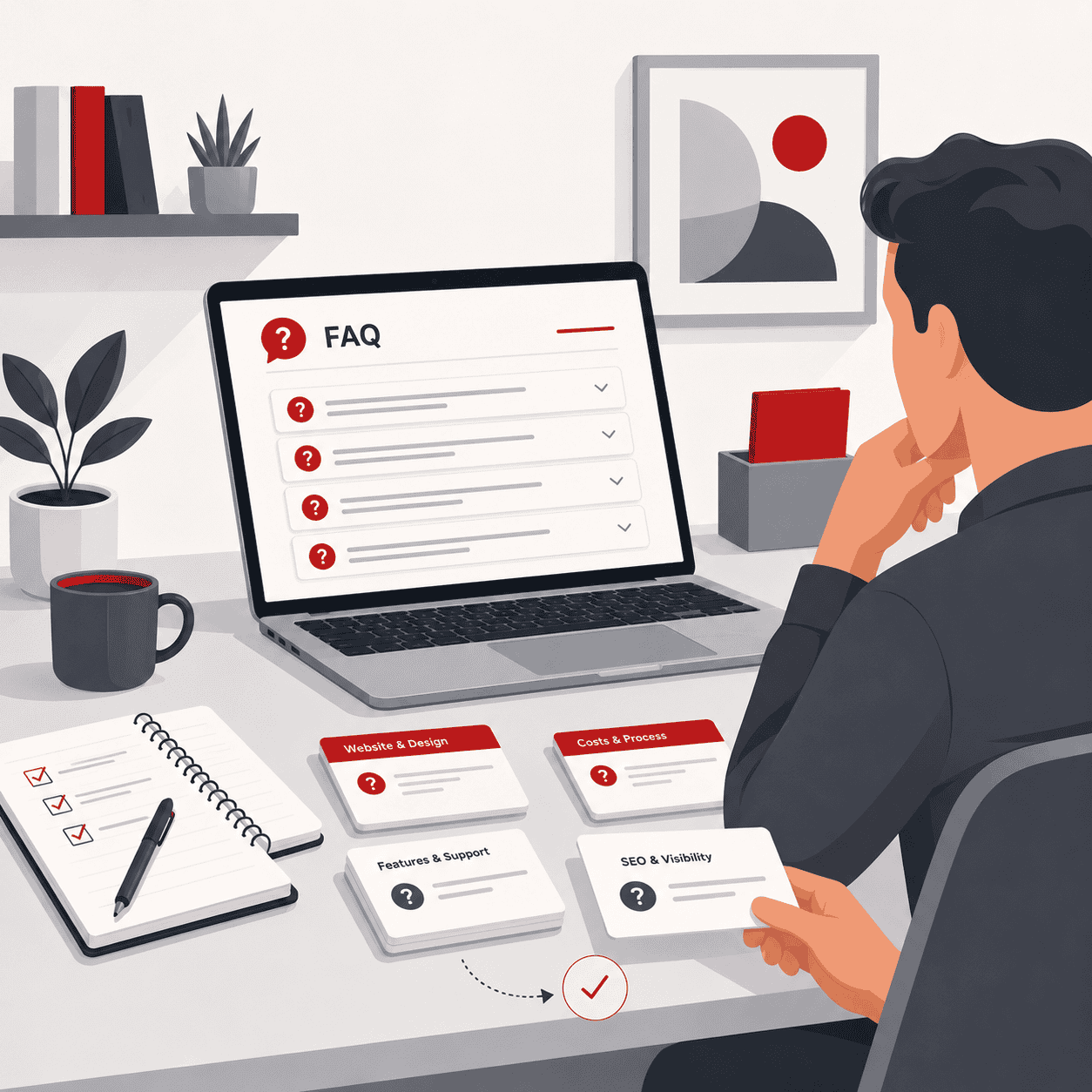
This page brings together the questions we are often asked by businesses planning a new website, improving an existing one or trying to understand what kind of support they need. Some answers are practical. Some are strategic. All of them are here to help you make a clearer, more confident decision.
If you cannot find the answer you need, you are welcome to get in touch. We will always try to give you a clear, practical answer rather than push you towards something you do not need.
Questions about whether your website needs work
These questions are useful if you know something is not quite right with your current website, but you are not yet sure whether you need a new site, a redesign or a smaller improvement.
How do I know if my website needs replacing?
A website does not need replacing simply because it is a few years old. What matters is whether it is still helping your business.
If your website no longer reflects what you do, is difficult to update, loads slowly, feels awkward on mobile devices or does not generate the right enquiries, it may be holding your business back. In some cases, a few focused improvements are enough. In others, starting again gives you a stronger long-term foundation.
The better question is not always, “Do I need a new website?” It is, “Is my current website helping people understand, trust and choose my business?”
Can my current website be improved instead of rebuilt?
Often, yes.
Not every business needs a completely new website. Sometimes improving the structure, updating the content, refreshing the design, speeding up the site or making the enquiry route clearer can make a meaningful difference without rebuilding everything from scratch.
We will always look at what makes sense for your business, your goals and your budget. If your existing website has good foundations, we will tell you. If it is likely to cost more to keep patching than replacing, we will explain why.
What makes a good business website today?
A good website is not judged only by how impressive it looks. It is judged by how well it helps visitors understand your business and take the next step.
That means it should clearly explain what you do, who you help and why someone should choose you. It should load quickly, work well on mobile devices, be easy to navigate and make it simple for visitors to get in touch.
Behind the scenes, it should also be secure, easy to manage and built on reliable foundations that support the way your business may grow or change over time.
Why is my website not generating enquiries?
There are several reasons a website may not be producing enquiries, and they are not always obvious at first glance.
Sometimes visitors cannot quickly understand what the business offers. Sometimes the messaging is unclear, the calls to action are weak, the pages feel thin or important information is difficult to find. In other cases, the website may not be attracting the right visitors in the first place.
The website is only one part of the wider picture, but it plays an important role. If people do not understand your business or feel confident enough to take the next step, they will often leave without making contact.
Does every business need a new website?
No.
Some businesses need a new website. Others need better content, stronger local SEO, clearer service pages, improved hosting, ongoing maintenance or a more focused redesign.
The right route depends on where your business is now, where you want it to go and how well your current website supports those goals. Our role is not to sell you a new website if you do not need one. It is to help you understand the most sensible next step.
Is a website still important if most of my customers come from social media?
Yes.
Social media is useful for visibility, conversation and relationship-building, but your website is usually where people go when they want reassurance before making contact.
Potential customers may see you on Facebook, Instagram or LinkedIn, then visit your website to understand what you do, check your credibility, look at your services and decide whether you feel like the right fit.
Your website is also one of the few digital spaces your business fully controls. That makes it an important foundation, even when social media is a major source of attention.
What should my website actually achieve for my business?
Every business has different goals, but most websites should support the same core decisions.
Your website should help people understand what you do, trust what they see, find the information they need and know what to do next. It should also support your wider marketing, explain your services clearly and reduce the number of repeated questions you have to answer manually.
A good website should not just exist online. It should make your business easier to understand, easier to trust and easier to choose.
Questions about choosing the right website route
There is rarely one perfect option for every business. The right route depends on what your website needs to do, how much flexibility you need, what stage your business is at and how much support you want along the way.
What's the difference between a website redesign and a completely new website?
A redesign improves what is already there. A new website starts again with a fresh structure, design and technical foundation.
If your existing website is built well, a redesign may be enough to improve how it looks, reads and works. This can be a good option when the website still has useful foundations but no longer reflects the business clearly.
If the site is technically limited, difficult to update, slow, poorly structured or no longer suitable for the way your business works, a new website may be the better long-term choice.
Should I choose a bespoke website or a template?
That depends on what your business needs the website to do.
A template website can work well for a smaller business with simple requirements, especially where the budget is limited and the structure is straightforward.
A bespoke website gives you more flexibility. It allows the design, structure, content and functionality to be shaped around your business rather than forcing your business into a pre-made layout.
The right choice is not about status. It is about fit. A good website route should match your goals, budget, audience and future plans.
Do I need a WordPress website?
Not always, but WordPress is a strong option for many small and growing businesses.
It is flexible, widely supported and makes it possible for you to update your own content without needing specialist technical knowledge. It can support simple brochure websites, larger service websites, ecommerce, blogs and more advanced functionality.
We recommend platforms based on what suits your business. If WordPress is the right fit, we will explain why. If another route makes more sense, we will tell you.
Can you work with my existing website?
In many cases, yes.
If your website has been built on a well-supported platform and has a healthy technical foundation, we can often improve, maintain or extend it without starting again.
Before recommending work, we will look at how the website has been built, how easy it is to update, whether there are any obvious technical issues and whether it still gives your business enough room to move forward.
If working with the existing site makes sense, we will say so. If rebuilding would be more reliable or cost-effective, we will explain that clearly.
Can you redesign only part of my website?
Yes.
Sometimes improving key pages such as your homepage, service pages or contact page can make a noticeable difference without redesigning the entire site.
This can be useful when your website is broadly working, but certain pages are unclear, outdated or not supporting enquiries as well as they should.
If a partial redesign is the most practical route, we will recommend that. If improving one area will not solve the wider problem, we will explain why before you invest in the wrong fix.
Will my website work on mobile phones and tablets?
Yes. Every website we build is responsive, meaning it adapts to different screen sizes.
With so many people browsing on mobile devices, your website needs to look professional and feel easy to use whether someone is viewing it on a desktop computer, tablet or smartphone.
That means text should be comfortable to read, buttons should be easy to tap, pages should load properly and visitors should not have to pinch, zoom or fight the layout to find what they need.
Can my website grow as my business grows?
Yes.
Your business today may not look exactly the same in two or five years’ time. You may introduce new services, expand into new locations, hire staff or want to add features such as online bookings, ecommerce, resource areas or customer portals.
We build websites with future flexibility in mind, so your site can develop as your business changes rather than forcing you to start again every time your needs move on.
A good website should support the stage your business is at now, while giving you room to grow into what comes next.
Questions about cost and value
Website pricing can be confusing because different providers include different things. These answers explain what affects cost, how payment options work and why the cheapest option is not always the best value over time.
How much does a professional website cost?
The cost of a professional website depends on what your business needs it to achieve.
A simple brochure website will naturally cost less than a larger bespoke website with advanced functionality, ecommerce or custom integrations. The number of pages, the level of design, the amount of content support and any ongoing services can all affect the final price.
Rather than pushing one fixed route, we will take the time to understand what you need before recommending the most suitable option.
The aim is not simply to build the cheapest possible website. It is to create something useful, reliable and appropriate for your business.
Do you offer monthly payment options?
Yes.
We understand that investing in a new website is not always something businesses want to pay for in one lump sum. Monthly website options can make professional web design more manageable by spreading the cost over time.
This can be particularly useful for startups, small businesses or organisations that need a stronger website but want to protect cash flow.
If you would prefer to purchase your website outright, that is also an option. We will help you choose the payment route that best fits your circumstances.
What affects the price of a website?
Several things can affect the price of a website.
These include the number of pages, the complexity of the design, whether you need help with content, any bespoke functionality, ecommerce features, booking systems, integrations, photography, SEO work, hosting and ongoing maintenance.
A small website with a clear structure will cost less than a larger site that needs more planning, writing, design and technical development.
The important thing is that you understand what is included before making a decision, so you can compare options properly rather than only comparing headline prices.
Is the cheapest website always the best value?
Not always.
A low upfront price can look attractive, especially when budgets are tight. The problem is that a cheap website can become expensive later if it is difficult to update, hard to expand, poorly structured, slow, unreliable or unable to support the way your business actually works.
Good value is not about spending the most money. It is about choosing a route that gives your business the right foundation without paying for things you do not need.
A well-planned website should support your business for years, not leave you needing another rebuild too soon.
Can I spread the cost of my website?
Yes.
Many businesses prefer to spread the cost of their website rather than making a larger upfront investment. Monthly website options can make this easier while still giving you a professionally designed site with the right essentials in place.
This route can be especially helpful if you need a better website now but want predictable monthly costs.
If buying the website outright makes more sense for your business, we can discuss that too. The best option depends on your budget, goals and how you prefer to manage ongoing website costs.
Questions about the website process
A website project should not feel like a mystery. These answers explain what usually happens from the first conversation through to launch, including what you need to provide and how feedback works during the project.
What is the process from enquiry to launch?
Every project begins with a conversation about your business rather than jumping straight into design.
We will talk through what your business does, who your website needs to speak to, what is working now, what feels unclear and what you want the website to achieve. From there, we can recommend the most sensible route and agree the scope before work begins.
Once the project is underway, the usual stages include planning, structure, design, content, development, testing and launch. You will have opportunities to review the work, ask questions and give feedback along the way.
The aim is to keep the process clear, collaborative and manageable, so you always know what is happening and why.
How long does a website project take?
Every project is different, but most websites take between four and eight weeks once the required information has been received and the project is ready to begin.
Smaller websites may be completed more quickly. Larger websites, ecommerce projects, bespoke functionality or projects that need significant content work can take longer.
Timescales also depend on how quickly feedback, content, images and approvals are provided. We will give you a realistic timescale before the project starts and keep you updated if anything changes.
A good website should not be rushed to the point where important decisions are missed, but the process should still feel focused and well managed.
What do I need to provide?
That depends on what you already have and how much support you need.
Some clients come to us with branding, images, copy, page ideas and a clear sense of what they want. Others have very little prepared and need help shaping the whole website from the ground up.
You may need to provide things such as your logo, brand colours, existing website access, domain details, service information, images, testimonials, policies or examples of websites you like.
We will guide you through what is needed, so you are not left guessing. If something is missing, we can help you work out the best way to handle it.
Can you write the website content?
Yes.
Many business owners know their work extremely well but find it difficult to explain it clearly on a website. That is completely normal. Writing for a website is not just about describing your services. It is about helping visitors understand what you do, why it matters and whether you are the right fit for them.
We can help plan, write and refine your website content so it feels clear, useful and natural to your business. This can include homepage copy, service pages, about page content, FAQs, calls to action and supporting sections.
Good website copy should not feel forced or overly sales-led. It should help people feel more confident about taking the next step.
Can you use my existing photos?
Yes, if they are suitable.
Good photos can make a website feel more personal, credible and specific to your business. If you already have professional images that represent your work well, we will happily use them.
If your existing images are low quality, outdated or inconsistent, we will explain where they may weaken the finished website. In some cases, we may recommend professional photography, carefully selected stock images or a more illustration-led approach.
The goal is to make sure the visuals support trust and clarity rather than simply filling space.
Will I get to review the design before the website goes live?
Yes.
You will have the opportunity to review the design and provide feedback before the website goes live. We do not believe a website should appear at the end of the project as a surprise.
The review process gives you time to look at the layout, content, page flow, imagery and overall feel of the site. We can then make agreed refinements before launch.
A website project works best when there is clear communication on both sides. Your feedback helps make sure the finished site reflects your business and supports the visitors it needs to help.
What happens if I change my mind during the project?
It is normal for ideas to develop once you start seeing the website come together.
Small refinements are usually part of the design process. If you want to adjust wording, images, layout details or small sections, we can normally deal with that as part of the agreed project.
If a change significantly alters the original scope, such as adding new pages, new functionality or a different direction, we will explain what that means before carrying out extra work.
The important thing is that changes are discussed clearly, so you stay in control of the project, the budget and the final result.
Questions about SEO and being found online
A good website should be clear for visitors and understandable for search engines. These questions explain how web design and SEO work together, what local SEO means and what to think about when redesigning an existing site.
Will my website be optimised for Google?
Yes.
Every website we build includes sensible SEO foundations. That means clear page structure, mobile-friendly design, clean URLs where appropriate, fast loading considerations, metadata, heading structure and content organised in a way that helps search engines understand the page.
This does not mean every website will instantly rank at the top of Google. SEO depends on your industry, competition, content, authority, location and ongoing activity.
What we can do is make sure your website starts from a strong foundation, rather than leaving search visibility as an afterthought.
What is the difference between web design and SEO?
Web design focuses on how your website looks, works and guides visitors once they arrive.
SEO focuses on helping the right people find your website through search engines such as Google.
The two are closely connected. A website can look professional but struggle if people cannot find it. Equally, a website can attract visitors through search but still lose enquiries if the pages feel unclear, slow or difficult to use.
The best results usually come when design, content, structure and SEO are considered together.
How long does SEO take to work?
SEO is usually a long-term process rather than a quick fix.
Some improvements can help quite quickly, especially if there are obvious technical issues, missing page titles, poor structure or weak local signals. More meaningful growth usually takes longer because search visibility builds over time.
How long it takes depends on your competition, location, website quality, content, backlinks, Google Business Profile, reviews and how consistently the work is developed.
Good SEO should not be about chasing shortcuts. It should help your business become easier to find, easier to understand and easier to trust online.
Can you help with local SEO?
Yes.
For many small businesses, local visibility matters more than reaching a national audience. You may need to appear for searches in Tamworth, nearby towns, Staffordshire, Warwickshire or the wider West Midlands, depending on where your customers are.
Local SEO can include improving your website structure, strengthening location relevance, supporting your Google Business Profile, improving service pages, adding useful local content and making sure your business information is consistent online.
The goal is not just to appear in search results. It is to help the right local customers find you, understand what you offer and feel confident enough to get in touch.
Will my Google rankings disappear if we redesign my website?
They should not disappear if the redesign is planned properly, but SEO does need to be considered carefully.
Rankings can be affected when pages are removed, URLs are changed, content is reduced or redirects are missed. This is why a redesign should not only focus on how the website looks. It should also consider what is already working and what needs to be protected.
Before redesigning an existing website, we look at the current structure, key pages, useful content and any known search visibility. Where needed, we can plan redirects, retain important content and build a stronger structure for future SEO.
A redesign should improve your website without carelessly losing the value you have already built.
Questions about ownership, hosting and support
These questions cover what happens after your website is built, including ownership, editing, hosting, maintenance and what happens if you ever decide to move to another provider.
Do I own my website?
You own the parts of the website that make it your business.
That includes your brand, domain name, written content, images you have supplied or licensed, products, customer data and the business information held within your website.
The underlying code and development work can be slightly different, especially where a website includes custom functionality, reusable systems or specialist development work. In those cases, the standard project usually gives you the right to use the website and any agreed functionality as part of your business, while Expand Digital Media retains ownership of its own reusable code, methods and development systems.
This does not mean you are trapped. If you ever choose to move to another provider, we will help make the transition as straightforward as possible and provide what is reasonably needed for your website to continue operating.
If you require full ownership of project-specific bespoke code, this can be discussed and agreed separately before work begins.
Can I edit my own website?
Yes.
We build websites so that common content updates can be managed without specialist technical knowledge. This usually includes editing text, changing images, adding blog posts, updating basic page content and managing everyday website information.
Some areas may still be better handled carefully, especially if they affect layout, design consistency, SEO, ecommerce settings or custom functionality.
If you want to manage updates yourself, we can show you how. If you would rather leave changes to us, we can support you through ongoing maintenance.
What happens to my domain name?
Your domain name should remain under your control.
If you already own a domain, we can usually connect it to your new website without changing ownership. If you do not yet have a domain, we can help you choose and register one, but it should still be registered clearly for your business.
Your domain is an important business asset, so it should never feel unclear who owns it, where it is managed or how it connects to your website and email.
We will explain what needs to happen and help make sure everything is set up properly.
Can you host my website?
Yes.
We offer website hosting for businesses that want their website, support and technical setup managed in one place.
Good hosting is not just a place to store website files. It affects speed, reliability, security, backups, email setup, updates and how quickly problems can be dealt with if something goes wrong.
We will recommend hosting based on what your website needs rather than selling more than necessary. The aim is to give your website a stable, dependable foundation.
Do you provide website maintenance?
Yes.
A website needs regular care to stay secure, reliable and useful. Software updates, backups, checks, small fixes and general support all help reduce the risk of problems building up quietly in the background.
Maintenance is especially useful if you do not want to worry about technical updates yourself, or if your website plays an important role in how people find and trust your business.
Our maintenance support is designed to keep your website in good working order after launch, so it continues to support your business rather than slowly becoming neglected.
What happens if I need help after my website goes live?
You can still come back to us for support.
Launching a website is not the end of the job for many businesses. You may need content updates, new pages, technical help, SEO support, design refinements, hosting support or advice as your business changes.
Some clients only need occasional help. Others prefer ongoing maintenance and support so they know the website is being looked after properly.
Either way, your website should not feel abandoned once it goes live.
Can I move my website to another provider in the future?
Yes.
We would always prefer clients to stay because they value the support, not because they feel stuck.
If you ever choose to move your website to another provider, we will work with you to make the process as smooth as possible. Your business assets remain yours, including your brand, domain, content, images you have supplied or licensed and your business data.
Expand Digital Media retains ownership of its own reusable development systems, frameworks, methods and proprietary code, but we will not make it unnecessarily difficult for you to move on.
A clear handover should help the website continue operating while protecting both your business assets and our own intellectual property.
Questions about working with Expand Digital Media
These questions are about fit, first steps and what happens if you are interested in talking through your website properly.
What types of businesses do you work with?
We mainly work with small and growing businesses that want a website that reflects the quality of their work and supports the next stage of their business.
That can include local service businesses, trades, professional services, consultants, retailers, hospitality businesses, charities, community organisations and other growing businesses that need clearer digital foundations.
We do not believe every business needs the same type of website. Some need a simple but credible starting point. Some need a more bespoke website. Some need ecommerce, SEO, hosting, maintenance or help improving what they already have.
The common thread is that the website needs to make the business easier to understand, easier to trust and easier to choose.
How do we get started?
The best place to start is with a conversation.
You do not need to arrive with a perfect brief, a full sitemap or every answer worked out. Many businesses come to us because they know their website needs attention, but they are not yet sure what the right route looks like.
We will talk through where your website is now, what your business needs, what feels unclear and what you would like the website to support. From there, we can recommend the most sensible next step.
There is no pressure and no obligation. The aim is to help you understand your options clearly before you decide what to do next.




Still unsure what your website needs?
That is completely normal.
Many businesses know their website matters, but they do not always know whether they need a new build, a redesign, SEO support, hosting, maintenance or simply a clearer plan. You do not need to have all of that worked out before speaking to us.
A good first step is a conversation about where your website is now, what feels unclear and what you want it to do for your business. From there, we can help you understand the most sensible route forward.
Ready to talk through your website?
If you are planning a new website, thinking about improving your current one or unsure what kind of support you need, we would be happy to help you make sense of the options.
You do not need to have a full brief ready. You might simply have a website that no longer feels right, a few questions about cost or ownership, or a sense that your business needs a stronger digital foundation.
We will take the time to understand where you are now, explain what would make sense and help you decide on the next step without pressure. If a new website is not the right route, we will tell you.