

Website Refresh
A better website without starting again
Sometimes a website is not wrong enough to throw away, but not strong enough to leave as it is.
You may still like your website. It may have the right general feel, the right colours, the right starting point or a structure that has worked well enough until now. It may not be broken, embarrassing or completely out of date. But when you look at it now, something feels missing. It does not quite explain the business with enough confidence. It does not quite guide visitors in the right way. It does not quite reflect the level of work you now deliver.
That can be a frustrating place to be, because the answer does not always feel obvious. You may not want the cost, time or decision-making that comes with a full website redesign, but you also know that changing a few images, rewriting a small paragraph or adding another section will not really solve the issue. The website needs more than routine updates, but less than starting again.
A website refresh is designed for that middle ground. It gives your existing website a more considered improvement, helping you understand what is missing and where the site could work harder. The aim is to keep what still has value, improve what no longer supports the business properly, and make the website feel clearer, more current and more useful for the people visiting it.
At Expand Digital Media, we help small and growing businesses refresh websites that still have potential but need stronger design, clearer content, better structure, improved functionality or a more confident visitor journey.
When small updates are no longer enough
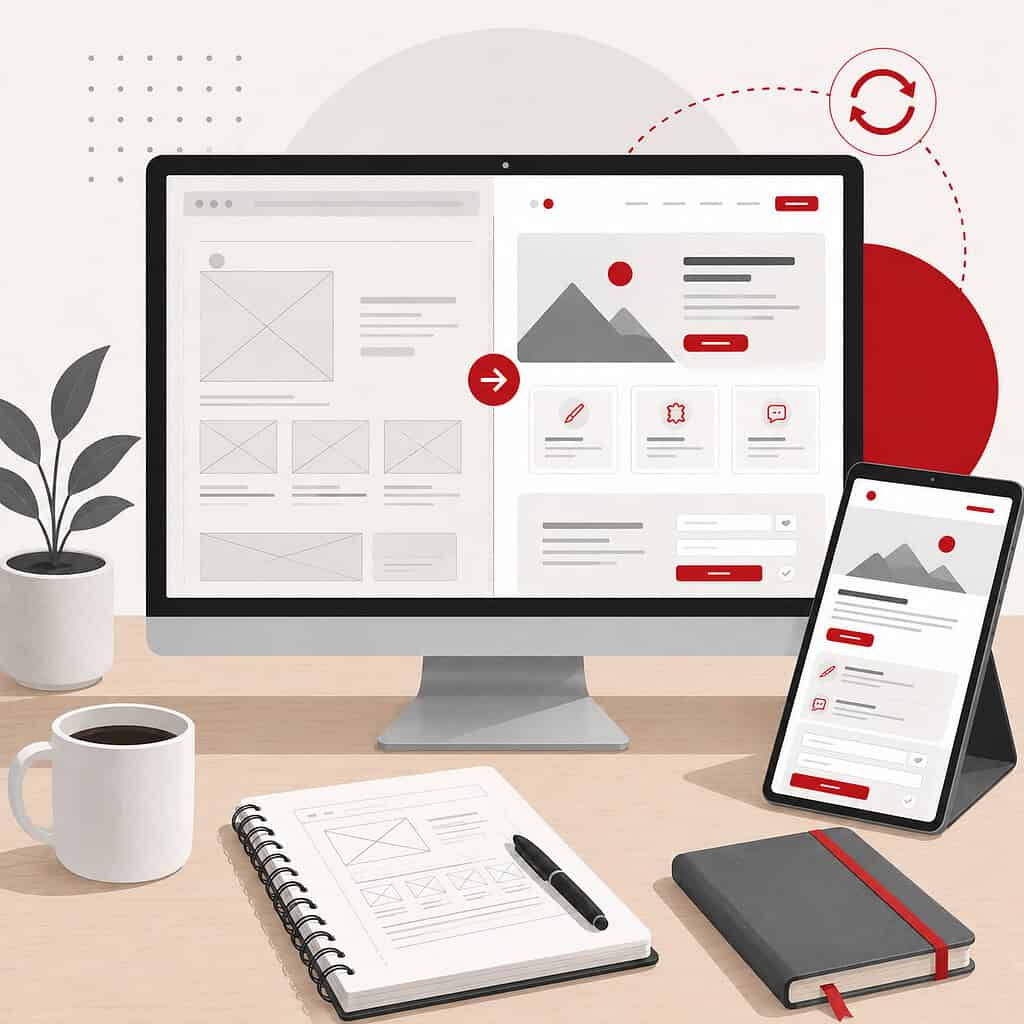
Small website updates have their place. Changing an image, updating a phone number, adding a paragraph or replacing an old testimonial can help keep a site current. But those changes only work when the wider website is already doing its job properly.
If the homepage feels vague, one new image will not make the message clearer. If the service pages are thin, changing a sentence will not give visitors the confidence they need. If the enquiry route is weak, changing a button label will not fix the journey that leads up to it. If the website feels slightly dated, the issue may not be one image or one section; it may be the way the layout, spacing, wording, navigation and calls to action work together.
After more than 20 years of working with websites, we have seen this happen in plenty of different ways. A website rarely reaches this point because one thing suddenly goes wrong. More often, the business changes gradually while individual updates are made around the existing site. Services develop, priorities move, the audience becomes clearer and the business grows, but parts of the website still belong to an earlier version of it.
The site may still work technically and contain plenty worth keeping. The problem is that another isolated edit is no longer enough to bring everything back together.
A website refresh looks at the website as a whole. It considers what the visitor needs to understand, what the business needs the site to support and where the current experience is falling short. That may lead to design refinements, stronger wording, improved page flow, better service explanations, clearer signposting, more useful calls to action or practical functionality that helps the website do more of the work.
The point is not to change things for the sake of it. It is to make the right improvements in the right places, so the website feels more complete, more confident and more useful.
What a website refresh can improve
A website refresh can improve how your website looks, but it should never be treated as a surface-level tidy-up. Visual presentation matters because people make quick judgements online, but the real value of a refresh is in how the website communicates, guides and supports action.
For some websites, the missing piece is clarity. The homepage may need to explain the business more directly. Service pages may need stronger structure, better wording or clearer explanations of what is included and why it matters. Navigation may need to make the visitor journey feel easier. Internal links may need to guide people towards the most useful next page rather than leaving them to work everything out alone.
For others, the missing piece is confidence. The site may need stronger trust signals, better use of testimonials, clearer about content, more consistent imagery, improved mobile layouts or calls to action that feel helpful rather than forced. These details matter because visitors rarely decide based on one thing. They build an impression from the whole experience.
A refresh can also improve how the website works behind the scenes for the business. Sometimes the site already looks good, but it does not support the right actions. It may need a better enquiry form, conditional form logic, a booking route, an events system, lead capture, automation, improved content management or a clearer way to handle different types of enquiries. These practical improvements can reduce admin, make the site easier to manage and help visitors take the next step with less friction.
Where useful, a refresh can also support basic SEO foundations. That might include improving headings, page titles, meta descriptions, internal links, service-page structure or content clarity so both visitors and search engines can better understand what the page is about. This is not the same as a full SEO campaign, but it can make the website stronger before you invest in wider visibility work.
The right refresh depends on what your website needs to do better. Sometimes that is visual. Sometimes it is structural. Sometimes it is practical. Often, it is a combination of all three.
Designed around clarity, trust and better decisions
A successful refresh should improve more than the appearance of the website. It should make the business easier for visitors to understand and easier to feel confident about.
People should be able to land on the site and quickly understand who you are, what you offer, who you help and what they can do next. They should not have to piece the business together from outdated wording, scattered services or pages that no longer match the way you actually work.
For small and growing businesses, that clarity is especially important. You may be competing with other local providers, relying on referrals, trying to appear more established or wanting your website to support a more professional stage of the business. In each case, the website needs to build confidence quietly and consistently.
Trust is built through many small signals working together. A current design helps the business feel active. Clear wording helps visitors understand the value. Good navigation helps them find what they need. Mobile usability reduces frustration. Proof, reviews, examples and practical detail help reduce doubt. A simple enquiry route makes the next step feel easier.
When those parts work together, the refreshed website feels less like an old online brochure and more like a useful part of the business. It helps people understand what they are looking at, feel more confident about what they see and move towards the right next step.
Website refresh or website redesign?
The difference between a website refresh and a website redesign is mainly about how much needs to change.
A website refresh is usually the right fit when the existing website still has a useful foundation. The platform works, the broad structure makes sense and there is something worth building on. The issue is that the site needs stronger presentation, clearer content, better flow, improved functionality or more confidence in the way it guides visitors.
If the website is fundamentally doing its job and mainly needs ongoing technical care, content changes or smaller fixes, website maintenance may be enough instead.
A website redesign is usually the better route when the website needs a deeper rethink. That may mean a new structure, a new design direction, significant content rewriting, a technical rebuild, a different platform setup or a complete shift in how the business presents itself online. If the current site is difficult to manage, technically limited, badly structured or no longer suitable for where the business is going, a refresh may only delay the work that really needs doing.
One thing experience has taught us is that the answer is not simply determined by how old the website is. We have seen older sites with useful foundations that were well worth improving, and newer websites where structural or technical limitations made continued patching poor value.
It is also completely valid to like parts of your current website. A refresh does not assume everything has failed. It starts from the idea that some things may still be worth keeping. The job is to work out what should stay, what should improve and what may be holding the website back.
If you are not sure which route fits, that is normal. Many business owners can feel that their website needs attention before they can name the exact problem. We can help you look at the current site and decide whether ongoing maintenance, a focused refresh, a staged improvement plan or a fuller redesign makes the most sense.
How we approach a website refresh
A website refresh should feel controlled, not open-ended. One of the biggest worries for business owners is that a small improvement project might turn into something vague, expensive or difficult to manage. That is why we start by understanding what feels missing, what you want the website to support and what level of change is realistic for your budget.
You do not need to arrive with a finished specification. You know the business, what has changed and what is bothering you about the current website. We can bring the website perspective: looking at the structure, wording, design, functionality and visitor journey and helping turn those concerns into a sensible set of priorities.
We look at the existing website carefully before recommending what to do. That means identifying what still works, what is weakening clarity or confidence and which improvements would make the biggest practical difference.
Years of working with existing websites as well as building new ones has taught us that knowing what not to change matters as well. Useful pages, content that still does its job, established routes through the site or parts of the design that still fit the business do not need replacing simply because a refresh is taking place.
We do not simply produce a long list of everything that could be changed. A useful refresh is about priorities. It should help you understand what matters most, what can wait and what is likely to give the website the strongest improvement first.
Cost depends on the scale of the refresh. Updating a homepage and a few key service sections is not the same as improving a wider site with custom forms, automation, events functionality, rewritten content and broader SEO foundations. But you do not need to guess the scope on your own. You can come to us with a concern, a rough budget or a sense that the website is not quite where it needs to be, and we can help shape the most sensible route.
Sometimes that route may be a fuller refresh that improves design, content, structure, mobile experience, calls to action and functionality together. Sometimes it may be staged, with the most important pages or features tackled first. Sometimes a smaller priority-led project is enough.
There are also occasions where looking properly at the existing site shows that continuing to refresh it would mean working around too many structural or technical limitations. If that happens, we would rather explain it and discuss the alternatives than let a refresh quietly turn into an expensive workaround.
The aim is not to push the biggest version of the work. It is to help you make a better decision. A website refresh should not feel like a blank cheque. It should feel like a clear, practical improvement plan shaped around your website, your business and what you are comfortable investing at this stage.




A practical middle ground for growing businesses
If your website feels nearly right but not quite strong enough, a refresh can help turn that uncertainty into a clearer plan. It gives you a way to identify what is missing, improve the parts that matter most and make the website feel more aligned with the business without forcing a full rebuild.
That middle ground matters because businesses rarely stay exactly as they were when their website was first created.
Services change. The audience becomes clearer. The business becomes more established. New ways of working appear. Expectations increase. The website may still be liked and technically sound, but gradually it stops representing the business as accurately or confidently as it once did.
For more than 20 years, Expand Digital Media has worked with websites at different stages of that journey. One of the things that experience gives us is perspective: not every ageing website needs replacing, and not every apparently small problem can be solved with another isolated edit.
Sometimes there is still a strong foundation underneath the things that feel wrong. In those cases, a focused refresh can preserve what has already earned its place while bringing the design, content, visitor journey and functionality back into line with the business as it is now.
A good refresh should leave the website feeling more current, more coherent and more useful. Visitors should be able to understand the business more easily, and you should feel clearer about what the website is doing and why the improvements have been made.
You do not always need to throw away a website to make it work harder. Sometimes you need somebody to look at it properly, recognise what is still valuable and know where focused improvement will do more good than starting again.
Let’s find what your website is missing
You do not need to know exactly what needs changing before getting in touch. If your website feels almost right but not quite strong enough, we can review it, identify what may be missing and help you decide whether a focused refresh is the right route.
The next step is a simple conversation about what your website needs to do better.